
Heated Rivalry and the Rejection of Romanticised Harm
Why audiences are craving intensity without entitlement and what that shift reveals about masculinity, safety, and control

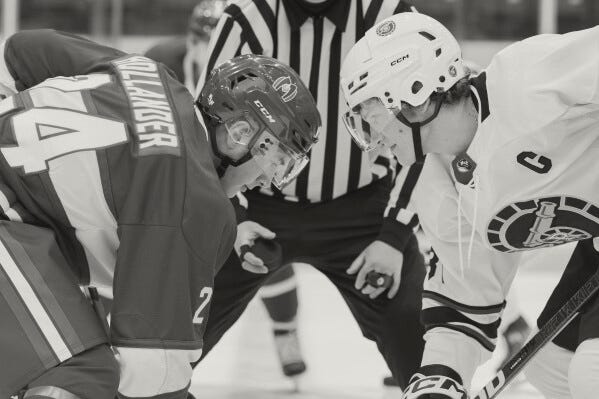
I didn’t expect a hockey romance to get under my skin. I certainly didn’t expect Heated Rivalry to have a hold on me. And yet here we are, talking about it in conversations that are really about power, desire, and what feels safe to want.
Its popularity signals something clear: audiences are losing patience with romance that treats harm as intensity, and control as chemistry.
This isn’t a story about perfect communication or exemplary behaviour. The characters are guarded, emotionally avoidant, competitive, and often terrible at saying what they mean. They hurt each other. They make selfish choices. They sit in tension far longer than they should. None of that is smoothed over or excused.
What’s striking is something else. Despite all that mess, the story never asks us to confuse harm with desire, or control with love.
That might sound like a low bar. Culturally, it isn’t.
There is something quietly revealing about the cultural obsession with Heated Rivalry. On the surface, it is a romance. A rivalry. Two elite athletes locked in years of desire, denial, and obsession. But its popularity points to something deeper: the way audiences are renegotiating masculinity, danger, and safety in an era shaped by sustained conversations about violence, power, and control.
This isn’t a rejection of intensity. If anything, it is a demand for it. What is being refused is something else entirely: the expectation that intimacy must come with fear, vigilance, or asymmetry.
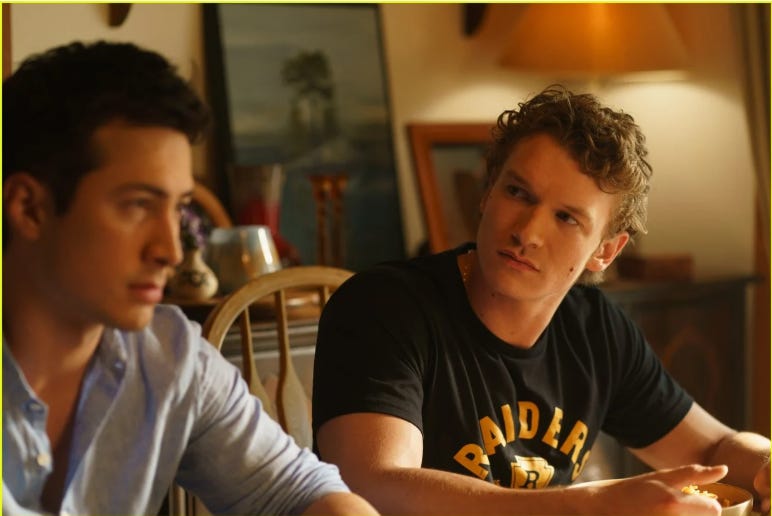
For decades, heterosexual romance has taught us to misread risk as chemistry. Jealousy is framed as protection. Persistence is framed as devotion. Power imbalances are sold as security. Emotional volatility is recoded as depth. These tropes are so familiar they barely register as narrative choices at all. They form the background noise of popular culture.
Yet those same tropes map uncomfortably well onto what policy now names as coercive control. Surveillance becomes “care.” Isolation becomes “us against the world.” Boundary violations become “grand gestures.” Economic dependence becomes “being looked after.” And crucially, the harm is rarely spectacular. It is patterned, cumulative, and often invisible to everyone except the person living inside it.
This is where fantasy becomes instructive.
What Heated Rivalry removes is not desire or dominance, but the structural conditions that allow domination to flow in one direction. The relationship is symmetrical. The characters are matched in strength, status, wealth, and credibility. No one is economically dependent. No one’s social standing collapses if they walk away. No one is managing another person’s emotions in order to stay safe. Conflict exists, but it does not metastasise into fear.
In other words, the fantasy does something culturally radical. It makes coercive control structurally impossible.
This matters because much of our policy response to violence still struggles to hold this distinction. Systems are relatively good at responding to incidents. They are far less effective at responding to patterns. Legal and service frameworks often require harm to escalate before it becomes legible, while popular culture has spent decades normalising the early warning signs.
Consider persistence. In romance, refusal is rarely treated as a boundary; it is treated as a challenge. In real life, repeated unwanted contact is one of the strongest predictors of future harm. Or jealousy, so often framed as passion, when it is in fact about entitlement and ownership. Or the “misunderstood bad man,” whose redemption arc is powered by a woman’s patience and emotional labour. These stories quietly rehearse the idea that women are responsible for managing male behaviour, and that harm is a regrettable but understandable by-product of love.
Policy narratives have been trying to unpick this for years. The shift toward recognising coercive control reflects a growing understanding that violence is not only about physical acts, but about domination, restriction, and the erosion of autonomy. Yet the cultural scripts remain stubborn. We continue to live inside stories that eroticise entitlement while asking systems to intervene only once that entitlement turns lethal.
This is why the appeal of “safe fantasy” should not be dismissed as escapism. It is diagnostic.
Audiences are not asking for softer men. They are asking for masculinity whose intensity does not spill over into threat. For desire that does not require someone else to become smaller, quieter, or more careful. For relationships where no one is performing constant risk assessment.
There is also something telling about where this fantasy sits in relation to gender. In many heterosexual narratives, women’s desire is mediated through safety calculations. What might anger him? What might provoke jealousy? What might escalate? In fantasy worlds where those calculations disappear, desire can finally be foregrounded. That is not accidental. It reflects a collective exhaustion with vigilance.
This has implications for how we talk about prevention.
Too often, prevention is framed as behavioural correction or moral instruction. Don’t do this. Don’t say that. But culture does not shift through rules alone. It shifts through stories about what is desirable, admirable, and normal. When audiences gravitate toward narratives that remove coercive dynamics while keeping intensity intact, they are signalling that safety is no longer the opposite of passion. It is a precondition for it.
That insight should sharpen, not soften, our policy ambition.
If we want to reduce violence, we cannot only respond once harm becomes undeniable. We have to disrupt the conditions that make domination feel romantic, inevitable, or excusable. That means naming entitlement early. Taking economic abuse and social isolation seriously. Designing systems that understand credibility gaps and patterned behaviour. And recognising that people already know, intuitively, what safe desire feels like.
They are finding it in fiction.
Fantasy, in this sense, is not a retreat from reality. It is a rehearsal for a different one.
The question is whether our institutions are willing to catch up.
#heatedrivalry #connorstorie #jacobtierney #rachelreid #hudsonwilliams #cravecanada #gbv #hbomax #endvaw #endgbv